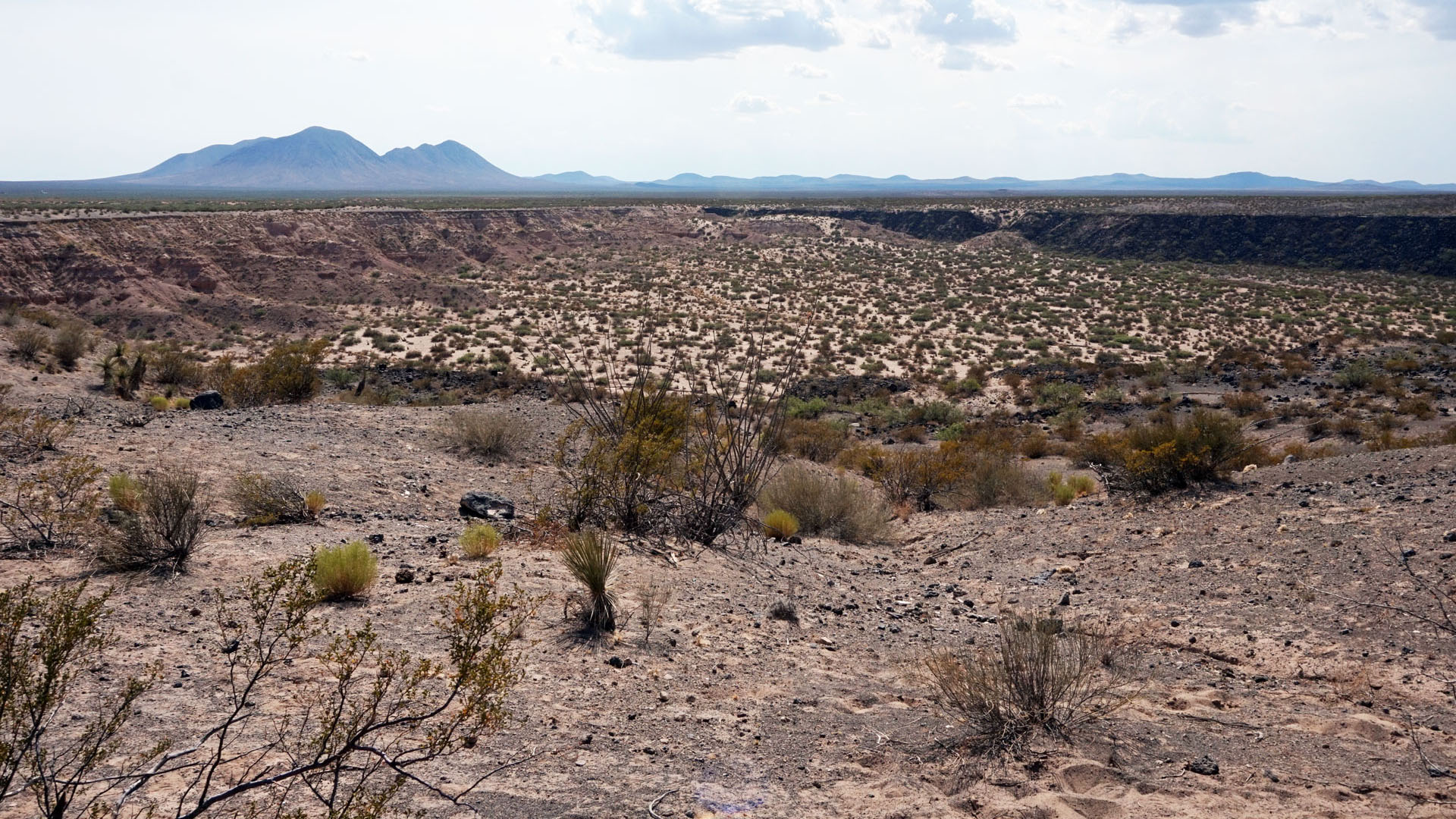
June 2017 · Potrillo Volcanic Field, Doña Ana County
New Mexico · Kilbourne Hole
Dispatches from the desert
Kilbourne Hole is a maar volcanic crater two miles wide, carved out of the desert ten thousand years ago when groundwater met magma and the resulting steam blew the landscape apart. In the summer of 2017, the RIS4E team — joined by NASA astronaut Butch Wilmore — turned the crater into a stand-in for a lunar walking surface. Stony Brook student journalists followed for six days of simulated extravehicular activities, rover-less rovers, and rocks held aloft for cameras pretending to be in Houston.
Filed 32 dispatches
From New Mexico.
An Apollo Astronaut’s Moondust Memories
For Some Earth Scientists, Flying to the Moon is the Ultimate Dream
For This Astronaut, Taking a Hike Was a Blast
Data Days: Geologists Find Benefits in Pausing For Reflection
Chasing Moon Dust
‘Contact’ in Real Life: Dishes in the Desert
Drones Over Potrillo: Seeing Planet Science from a New Angle
Tools in the Field
Inside Aden Crater, a World of Tunnels, Tubes and Pits
Finding Energy in the Moon
Searching for Mars microbes by the PIXL
Kilbourne’s Volcanic Confetti
(16,000 Years) After the Volcano: Data Mining at Kilbourne Hole
Data Mining at Kilbourne Hole
Meeting the Volcano
The Professor of Potrillo
Reading a Meteorite with Laser Light
RIS4E in the Lab
Mars in New Mexico: A Geologist in Paradise
Meet the RIS4E Team—And Their Hats
The Roving Adventures of Team LiDAR
Out in the Desert, Watching the Universe is a 24/7 Job
Searching for Hints of Extra-Terrestrial Life in the Hard Rock of Earth
Day 1: Water Wasn’t Enough | Reporting RIS4E: New Mexico
Day 5: The Astronauts’ Way | Reporting RIS4E: New Mexico
Day 3: Keeping Everything Cool | Reporting RIS4E: New Mexico
Day 5: Three Generations of Thomas, and Harrison Schmitt | Reporting RIS4E: New Mexico
Scorching Sun and Deadly Snakes: Staying Safe in the Field
Staying Safe in the Field